
3 Best Facial Sunscreens for Acne-Prone Skin
Choosing the right facial sunscreen when you have acne-prone skin is essential to prevent breakouts while providing effective sun protection. Not all sunscreens are suitable—those that clog pores or contain irritating ingredients can worsen your condition. It’s important to understand what ingredients work best, how to identify non-comedogenic formulas, and which products offer the right balance of protection and skin comfort. Exploring top options can help you find a suitable match that keeps your skin clear and protected.
Waxhead Zinc Oxide Sunscreen Face & Nose SPF 30, Reef Safe & Waterproof (White 2oz)
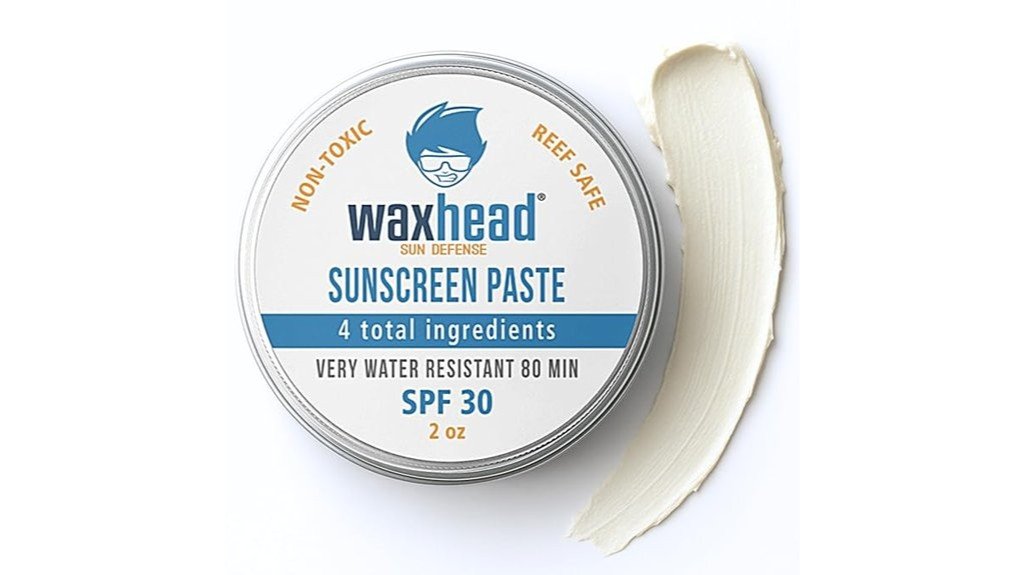
If you have sensitive skin, acne-prone skin, rosacea, or eczema, Waxhead Zinc Oxide Sunscreen Face & Nose SPF 30 is a good choice. It is gentle and won’t irritate your skin. The zinc oxide in this sunscreen is non-comedogenic. That means it won’t clog your pores or cause breakouts. It’s recommended by dermatologists and safe for pregnant women and kids. So, it works well for the whole family.
This sunscreen offers broad protection. It defends your skin against UVA and UVB rays. This helps lower the risk of sun damage and dark spots. Plus, it’s made with eco-friendly ingredients. It is biodegradable and reef-safe, so it won’t harm the ocean. It stays on your skin even when you swim or sweat.
Best for: People with sensitive or acne-prone skin. Those with rosacea or eczema. Anyone who wants a gentle, eco-friendly, water-resistant sunscreen for outdoor fun.
Pros:
- Safe for sensitive skin, including babies and pregnant women.
- Made with natural, biodegradable ingredients like zinc oxide, coconut oil, beeswax, and vanilla.
- Gives strong broad-spectrum SPF 30 protection.
- Provides visible coverage for thorough application, especially on the face and nose.
Cons:
- The white tint may need blending or makeup to look natural.
- The paste texture might take some time to get used to if you prefer spray or lotion sunscreens.
- It mainly comes in white, so it’s more for protection than for looks.
This sunscreen is easy to understand and great for protecting your skin during outdoor activities. It’s gentle, eco-friendly, and effective for your face and nose.
Neutrogena Clear Face Sunscreen Lotion SPF 50 for Acne-Prone Oily Skin
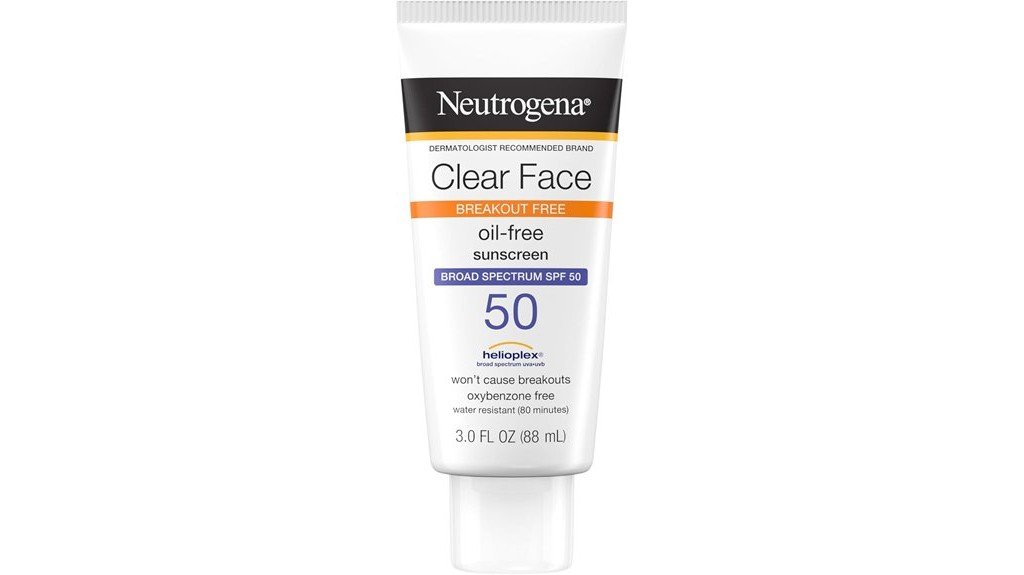
Neutrogena Clear Face Sunscreen Lotion SPF 50 is made for people with oily, acne-prone, and sensitive skin. It helps protect your skin from the sun without causing breakouts or blocking pores. The sunscreen gives broad protection with SPF 50 using Helioplex technology. It is oxybenzone-free, which makes it less likely to irritate your skin.
This lotion is lightweight, oil-free, and fragrance-free. It leaves a matte, non-greasy finish, so your skin looks fresh and doesn’t shine. It absorbs quickly into the skin and won’t clog pores. The sunscreen is water-resistant for up to 80 minutes, which makes it good for outdoor activities. It is tested by dermatologists to be safe and effective for your skin type.
This product helps keep your skin clear while protecting you from the sun every day. It is a good choice if you want sun protection that is gentle, light, and easy to use.
Best For: People with oily, acne-prone, or sensitive skin who want a simple, effective sunscreen that won’t irritate or clog skin.
Pros:
- Oil-free and leaves a matte finish
- Doesn’t clog pores
- Water-resistant for 80 minutes
- Fragrance-free and gentle on skin
Cons:
- May shine a little more over time if you reapply often
- Can feel heavy if you use too much
- Might need to reapply often if you sweat a lot
Eucerin Sun Clear Face Sunscreen SPF 50
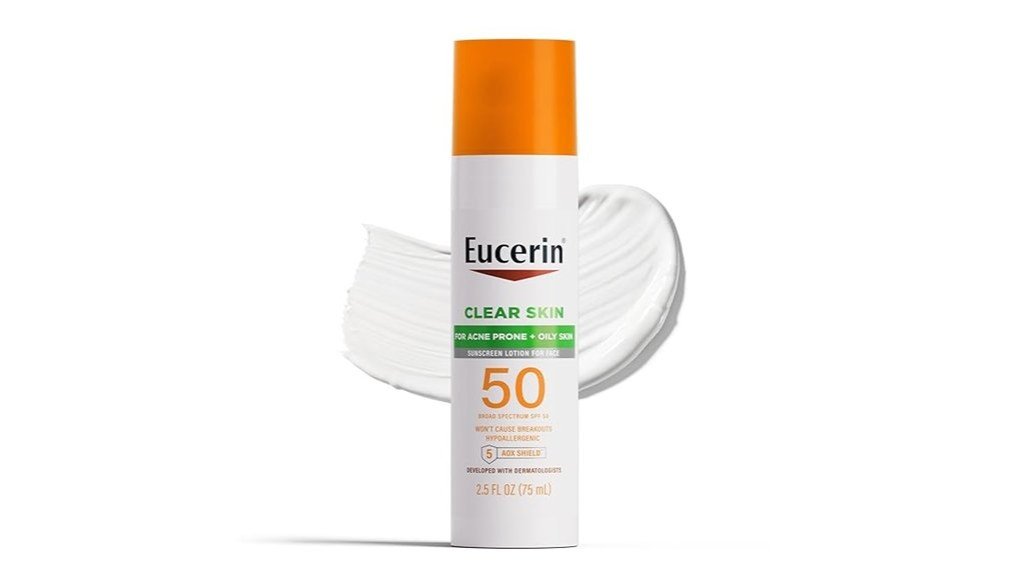
Eucerin Sun Clear Face Sunscreen SPF 50 is made for people with oily, acne-prone, and sensitive skin. It offers high sun protection without clogging pores. The sunscreen contains oil-absorbing minerals and antioxidants like Glycyrrhetinic Acid, Licochalcone A, Vitamin E, and Vitamin C. These help fight free radicals and reduce inflammation.
The formula is light and non-greasy. It leaves a matte finish, so it’s good to wear under makeup. This sunscreen is made by dermatologists and is non-comedogenic, meaning it won’t cause breakouts. It is also hypoallergenic, which helps reduce the chance of irritation. The product is fragrance-free and dye-free, making it safer for sensitive skin.
This sunscreen is best for people who want strong sun protection but have skin that easily gets oily or irritated. It protects with SPF 50 and helps keep skin clear and healthy.
Some things to keep in mind: You may need to reapply every two hours for the best protection. It has a small size of 2.5 oz, so you might need to buy more if you go on long trips or use it often. It doesn’t have added fragrance or colors, which some people prefer.
Factors to Consider When Choosing Facial Sunscreens for Acne Prone Skin
When choosing a facial sunscreen for acne-prone skin, it’s important to consider formulas that are oil-free and labeled non-comedogenic to prevent pore clogging. You should also look for broad spectrum protection to guard against UVA and UVB rays, along with a lightweight texture that won’t feel heavy or greasy on your skin. Features like water resistance can be beneficial if you sweat or get wet frequently, ensuring consistent protection throughout the day.
Oil-Free Formulas
Oil-free facial sunscreens are very helpful for people with oily and acne-prone skin. They don’t contain added oils, so they don’t cause extra shine or clogged pores. Many oil-free sunscreens have ingredients that won’t block your pores, like silica or zinc oxide. These sunscreens usually feel light andabsorb quickly into your skin. They give good sun protection without feeling greasy or heavy. Because of this, they are great to use every day, especially if you use other acne treatments. Choosing an oil-free sunscreen can help keep your skin clear and healthy. It reduces the chance of breakouts and irritation, making it a smart choice for skincare if your skin is prone to acne.
Non-Comedogenic Ingredients
Choosing a sunscreen with non-comedogenic ingredients is a smart move. These sunscreens are made to avoid clogging your pores. When pores get clogged, it can cause pimples or breakouts. So, using non-comedogenic sunscreens helps keep your skin clear and healthy.
These sunscreens do not contain heavy oils or thick ingredients that can block your pores. Instead, they include ingredients like zinc oxide or titanium dioxide. These block the sun’s rays without causing pimples. Some lightweight oils, like jojoba or sunflower oil, are also added because they are less likely to cause breakouts.
Look for sunscreens labeled as non-comedogenic. These have been checked and tested to make sure they won’t clog your pores or cause acne. Using these sunscreens helps protect your skin from the sun while keeping your skin clear. It’s a simple way to stay safe in the sun and look after your skin at the same time.
Broad Spectrum Protection
Broad spectrum protection is important when choosing a facial sunscreen for acne-prone skin. It means the sunscreen protects your skin from both UVA and UVB rays. UVA rays go deep into the skin and can cause aging and damage. UVB rays cause sunburn and can lead to skin cancer. Sunscreens with ingredients like zinc oxide or avobenzone usually provide protection from both types of rays. Using such sunscreens daily can lower the chance of skin cancer and prevent sun damage. Sun damage can make acne scars worse or cause dark spots. Protecting your skin from both UVA and UVB rays keeps it healthier and helps prevent aging, burns, and other skin problems.
Lightweight Texture
Many things affect how comfortable and how well a facial sunscreen works for acne-prone skin. One important thing is how the sunscreen feels on your skin. A lightweight sunscreen feels thin and smooth. It absorbs quickly and doesn’t leave a greasy feeling. This makes it easier to use every day. Lightweight sunscreens usually leave a matte finish. This means your skin looks natural and not shiny. You don’t need to reapply as often.
Sunscreens made with oil-free or water-based ingredients are lighter. They feel less heavy on your skin. This is good for sensitive or acne-prone skin. Light textures spread easily and help prevent clogged pores. Small molecules or tiny particles in some sunscreens create a breathable barrier. This makes your skin feel comfortable and protected at the same time.
Water Resistance Features
Water resistance is an important feature when choosing facial sunscreens for acne-prone skin. If you spend a lot of time outside or do activities that make you sweat or get wet, water-resistant sunscreens can help protect your skin better. These sunscreens are made to keep their SPF protection for a certain time, usually 40 or 80 minutes, even when you are sweating or in water. Ingredients in water-resistant sunscreens help the product stick to your skin so it doesn’t wash off easily. This means you won’t need to reapply as often, which is good for your skin.
However, if you go swimming or sweat heavily, you should still reapply sunscreen. Water resistance helps keep protection going during outdoor fun, without hurting your skin. Choosing water-resistant sunscreens makes it easier to stay protected during active days outside.
Frequently Asked Questions
Are Mineral Sunscreens Better for Acne-Prone Skin Than Chemical Ones?
Yes, mineral sunscreens are generally better for acne-prone skin because they contain zinc oxide or titanium dioxide, which sit on the skin’s surface and are less likely to clog pores or cause irritation compared to chemical filters.
How Often Should I Reapply Sunscreen on a Daily Basis?
You should reapply sunscreen every two hours when outdoors, and more often if you’re sweating or swimming. Even with acne-prone skin, regular reapplication protects you from UV damage and keeps your skin safe throughout the day.
Can Facial Sunscreens Cause Breakouts Even if They Are Non-Comedogenic?
Yes, facial sunscreens can cause breakouts even if they’re labeled non-comedogenic. Sometimes, ingredients or formulations might still irritate your skin or clog pores. Always patch test new sunscreens to guarantee they won’t trigger breakouts.
Do Facial Sunscreens Offer Adequate Protection in Water Activities?
Yes, many facial sunscreens provide adequate water resistance, helping you stay protected during water activities. Look for labels like “water-resistant” or “very water-resistant,” and reapply regularly to guarantee continuous sun protection while swimming or sweating.
Are There Any Natural or Organic Options Suitable for Sensitive, Acne-Prone Skin?
Yes, you can find natural or organic sunscreens suitable for sensitive, acne-prone skin. Look for mineral-based formulas with zinc oxide or titanium dioxide, free from fragrances, oils, and harsh chemicals, to protect your skin without irritation or clogging pores.